Bacon Banter
United StatesA series highlighting the people behind CFG’s success.
Driving Sustainable Impact
A Conversation with Tiffany Lee, CFG Exec. Dir. of Sustainability

Widget title goes here.
Your engaging subtitle goes here. Provide a brief description or engaging subtitle that captures the essence of your content and encourages users to explore further. This text should be concise yet informative.
What inspired you to pursue a career in sustainability, and what continues to motivate you today?
When I chose my career path as a child, sustainability wasn’t even on my radar. I wanted to be a veterinarian — and that’s exactly what I became. Throughout my career, opportunities for growth and leadership continued to emerge, and stepping into sustainability at CFG was one of them.
There’s a quote my dad clipped from Farmer’s Digest that hung on our refrigerator throughout my childhood: “The soil is ours to make or mar, and we should aim to leave it in as good or better condition as it was when it came under our hands.” That idea has stayed with me. Whether practicing veterinary medicine, specializing in animal care and welfare, or leading sustainability efforts, my goal remains the same: to leave things better than I found them.
There’s a quote my dad clipped from Farmer’s Digest that hung on our refrigerator throughout my childhood: “The soil is ours to make or mar, and we should aim to leave it in as good or better condition as it was when it came under our hands.” That idea has stayed with me. Whether practicing veterinary medicine, specializing in animal care and welfare, or leading sustainability efforts, my goal remains the same: to leave things better than I found them.
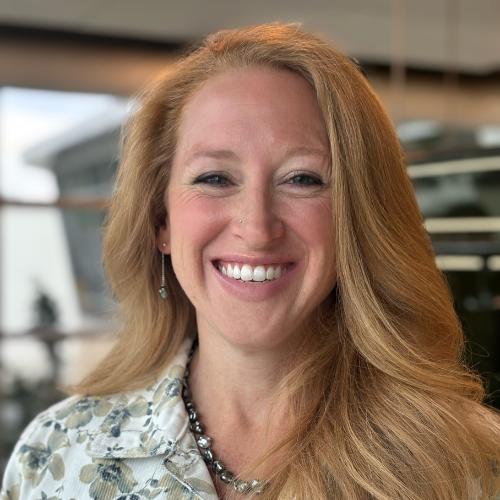
As a leader in sustainability, how do you help shape a more responsible and resilient future for our industry?
The most important thing I can do is push for continuous improvement — across environmental impact, financial performance, food safety, animal care, and beyond. Progress doesn’t always come in sweeping changes. Sometimes it’s one small improvement at a time. But those incremental gains add up and strengthen the resilience of our entire industry.
Can you share a moment when you felt you were truly making an impact?
A large part of my role involves translating complex regulations and policies into practical applications for our farms and plants — and just as importantly, helping customers understand how those policies affect on-farm practices.
One example is California’s Prop 12 implementation. While CFG and CVFF began that work before I stepped into this role, I was able to help bridge understanding between our on-farm teams and our customers as we navigated challenges and expectations. Being able to connect every link in the supply chain — from sow farms to the grocery store shelf — is incredibly meaningful to me.
One example is California’s Prop 12 implementation. While CFG and CVFF began that work before I stepped into this role, I was able to help bridge understanding between our on-farm teams and our customers as we navigated challenges and expectations. Being able to connect every link in the supply chain — from sow farms to the grocery store shelf — is incredibly meaningful to me.
What advice would you give to women passionate about sustainability or leading in traditionally male-dominated industries?
Do the work.
At times, you may feel like you’re working twice as hard — and sometimes that may be true. Do the work anyway. And even if you’re considered the expert, be willing to admit when you don’t know something. “Fake it ’til you make it” only goes so far. Work smart, work hard, and stay humble throughout the process.
At times, you may feel like you’re working twice as hard — and sometimes that may be true. Do the work anyway. And even if you’re considered the expert, be willing to admit when you don’t know something. “Fake it ’til you make it” only goes so far. Work smart, work hard, and stay humble throughout the process.
How can businesses like CFG play a meaningful role in creating a more sustainable future? What makes you optimistic?
By continuing to do what CFG has done for more than 100 years: make stewardship a core value.
Sustainability isn’t new to Clemens Food Group. Our founder, John C. Clemens, demonstrated efficiency long before it became standard practice. When delivering pork products from the suburbs of Philadelphia to the city, he ensured his wagon was never empty on the return trip — maximizing resources and minimizing waste. “Never an empty wagon” wasn’t just a phrase; it was an early expression of stewardship.
As long as we strive to improve — whether increasing pigs weaned per sow, reducing water use in our plants, or leveraging data to make smarter decisions — we will continue to make meaningful progress.
Sustainability isn’t new to Clemens Food Group. Our founder, John C. Clemens, demonstrated efficiency long before it became standard practice. When delivering pork products from the suburbs of Philadelphia to the city, he ensured his wagon was never empty on the return trip — maximizing resources and minimizing waste. “Never an empty wagon” wasn’t just a phrase; it was an early expression of stewardship.
As long as we strive to improve — whether increasing pigs weaned per sow, reducing water use in our plants, or leveraging data to make smarter decisions — we will continue to make meaningful progress.
Looking ahead, what change or innovation excites you most?
There isn’t one single innovation that stands out to me. What excites me most is the growing interest in sustainability from our customers. That interest creates opportunities for education — to explain our practices, share why we do what we do, and build trust.
We’re focused on producing food for families in the most responsible and efficient way possible. Every conversation that increases understanding moves us forward.
We’re focused on producing food for families in the most responsible and efficient way possible. Every conversation that increases understanding moves us forward.